
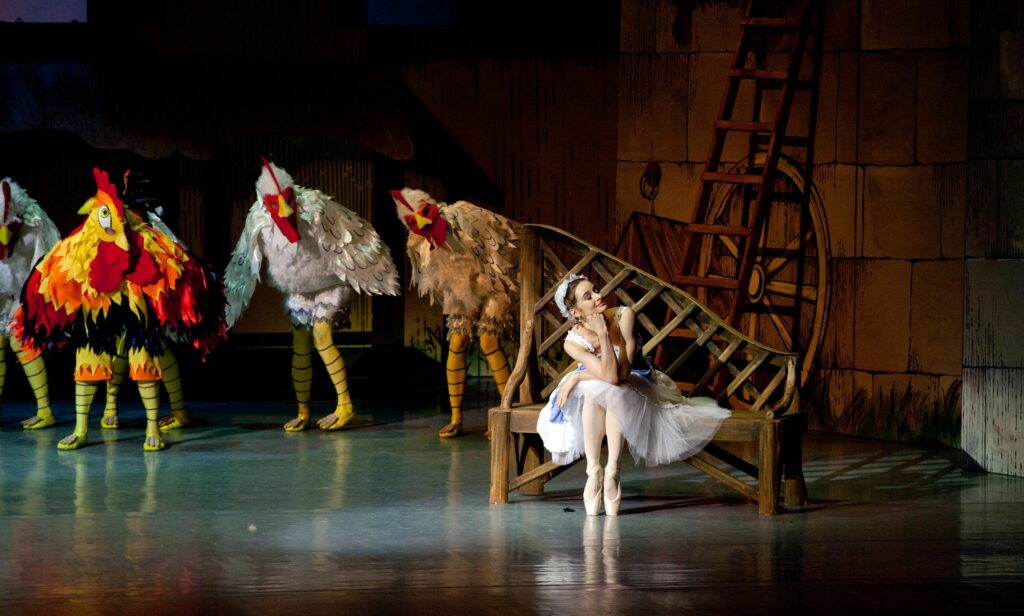
Ilona Kravchenko as Lise in Ashton’s La Fille mal gardée with The National Ballet of Ukraine, June 2025 © Oleksandr Putrov.
by Rachel Thomas, Communications Manager, The Frederick Ashton Foundation
June 2025 saw the debut performances of Ashton’s La Fille mal gardée at the National Opera of Ukraine in Kyiv. Since its premiere by The Royal Ballet in 1960, Fille has held an important place in the repertories of many of the world’s leading companies—delighting audiences from London to Paris, Tokyo, New York and beyond with its wit, musicality and humanity. That the National Ballet of Ukraine, amid the immense challenges of war, should now stage Ashton’s sunlit comedy – both a brand new production and a stylistic departure for the company – is a remarkable feat of artistry and resilience.
Spearheading the project to bring the ballet to Ukraine was Ivan Putrov, former Principal of The Royal Ballet who, with the charity Inspiration in Motion, produced the 2024 London gala where the idea for the Kyiv premiere was first conceived. Putrov was drawn to La Fille mal gardée through a deep personal connection with the work, having rehearsed Colas with the original Alain, Alexander Grant, and performed many of its roles with The Royal Ballet. Recognising both Fille’s rich heritage and its direct, human appeal, he was convinced it would resonate in Ukraine, where theatre and dance occupy a central place in cultural life.
The immediate challenge was securing the funds to bring the project to fruition. Putrov recalls the collective effort of artists and organisations worldwide who contributed their time and expertise, and the generosity of those who waived fees or offered financial support—among them the ballet’s rights holder Jean-Pierre Gasquet, Mikhail Baryshnikov and The Frederick Ashton Foundation.
At the heart of the production was ballet master Jean Christophe Lesage, who oversees productions of La Fille mal gardée internationally and travelled to Kyiv (with his cat Ploum… a story in itself!) to bring the ballet to the stage. Arriving by train from Vienna, Lesage was struck less by fear than by the surprise of his hosts that he had come at all. For him, there was no question: “I had been invited to stage Fille—and so I did, working as I would in Paris or London.”
Daily life continued amid air-raid alerts and power shortages, yet Lesage found everyone he encountered at the National Opera eager to work, listen and adapt. Years of disruption through first the pandemic and then the war meant this was the company’s first major premiere in some time, and the hunger to perform was palpable.
While the dancers brought strong classical foundations, Ashton’s distinctive, English style presented new challenges: responsive musicality rather than bravura display; subtleties of épaulement and fleet footwork in the place of high extensions and multiple pirouettes; and character drawn from truth rather than exaggeration. Lesage encouraged the dancers to think of themselves not as performers but as people: reacting, listening, and inhabiting the pastoral world of La Fille mal gardée with honesty and sincerity. “The dancers were so open,” he recalls. “They were really, really listening, and ready to give everything.” And Ashton’s organic narrative and choreography gave much in return. “Fresh, honest, alive. It’s pure joy, even when everything around hurts,” shared Kateryna Kurchenko, who performed the role of Lise.
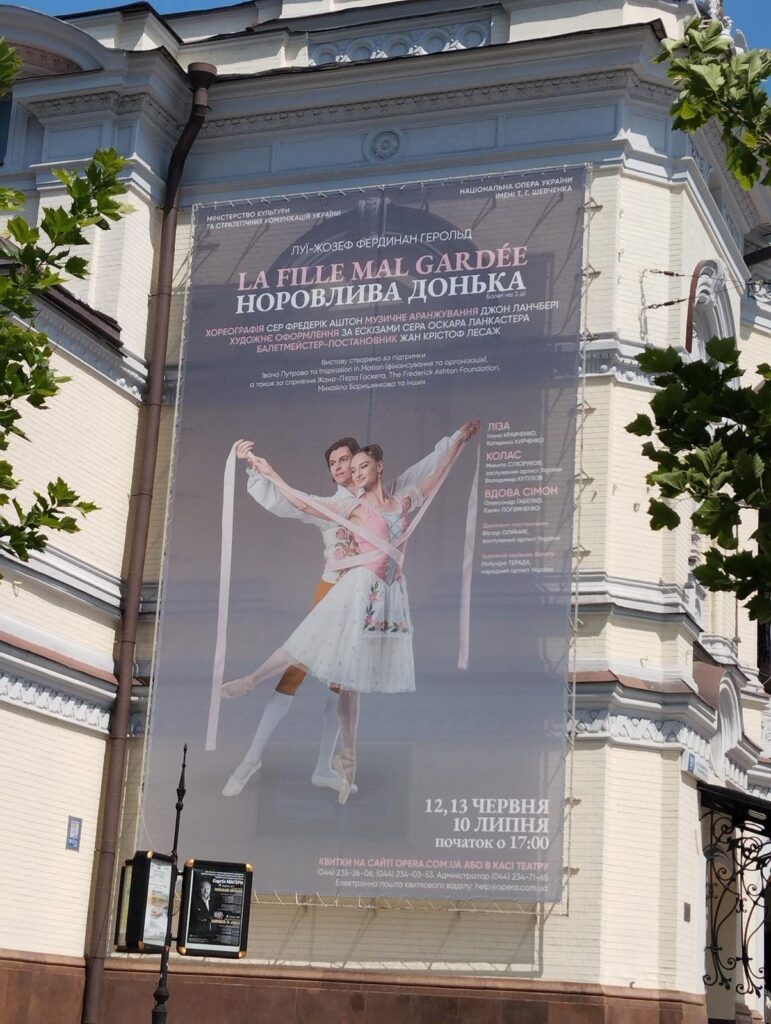
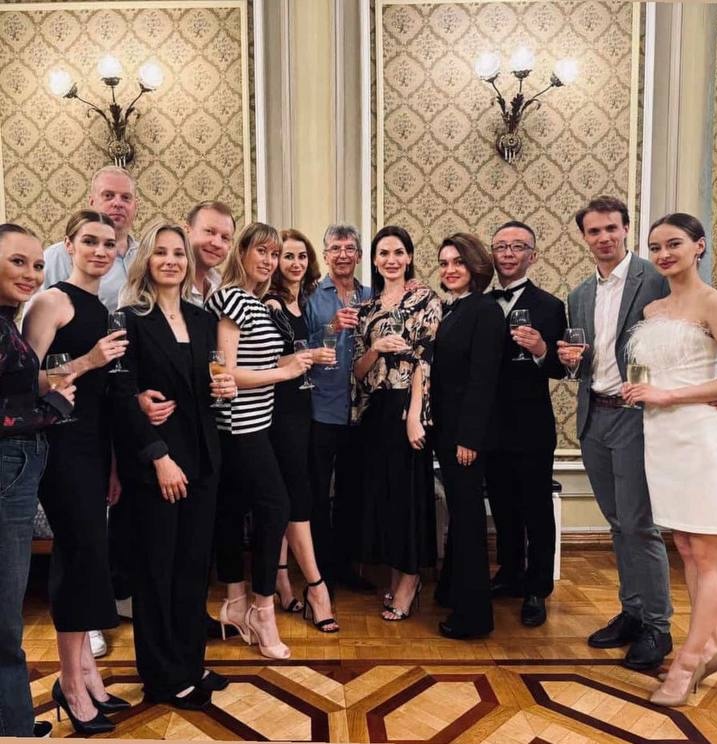
Left: A banner for La Fille mal gardée in Ukraine; Right: Dancers and artists of The National Ballet of Ukraine with stager Jean Christophe Lesage (centre). Phs Jean Christophe Lesage.
Behind the scenes, the production relied on the skill and resourcefulness of a dedicated team who, Lesage explains, “have nothing but gave everything”. Around 60 members of the stage crew had been called up, leaving fewer than 20 behind. Subcontractors were brought in to build the sets, while a small costume team worked tirelessly to recreate Osbert Lancaster’s designs. From Alain’s umbrella to Widow Simone’s clogs, props were sourced and donated from around the world. Under the guidance of the Opera’s Deputy General Director for Production and Creative Affairs, Ievgen Chernikov – “always there, solving problems”, according to Lesage – La Fille mal gardée reached the stage in full, vibrant detail.
At the premiere, the curtain came down to rapturous standing ovations. Despite daily uncertainty and the need to use the cloakroom as a shelter during air raids, every performance in the run was sold out. “It was a breath of fresh air for the audiences to receive this masterpiece into their repertoire for years to come,” says Putrov. Reflecting on the wider significance of bringing La Fille mal gardée to Kyiv, Nabuhiro Terada, Director of the National Ballet of Ukraine, describes how the ballet resonates with special sincerity in a time of deepening national crisis. “For us,” he writes, “this is more than just a performance. It is a symbol of support, of light, of solidarity—and of belief in the power of art to unite, to heal, and to inspire.”
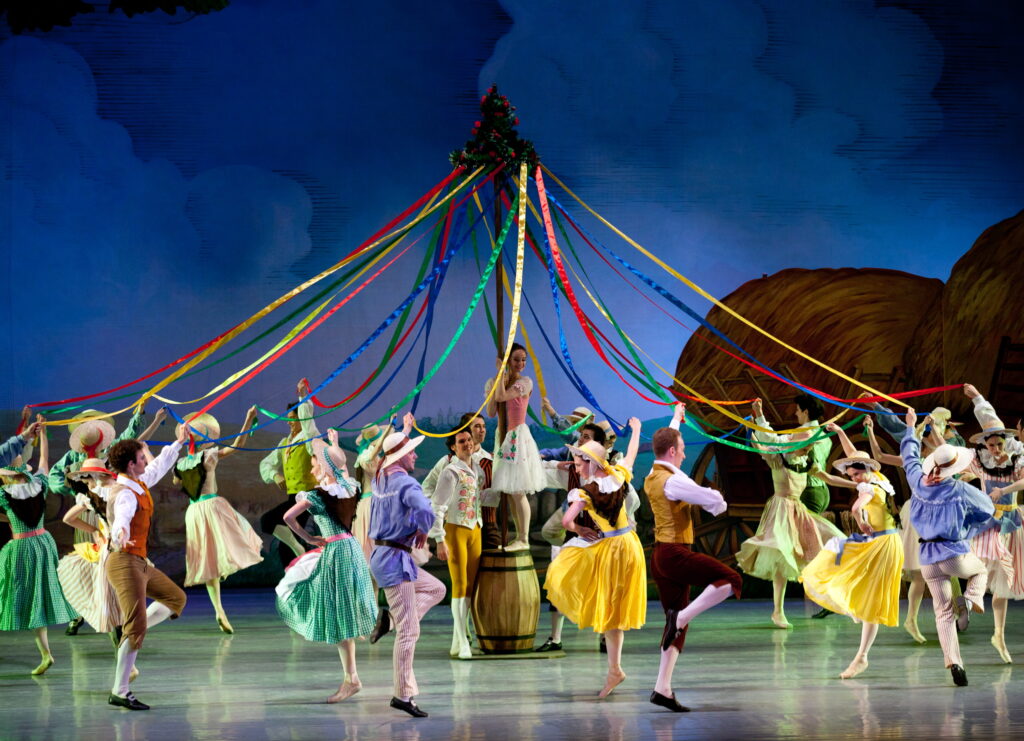
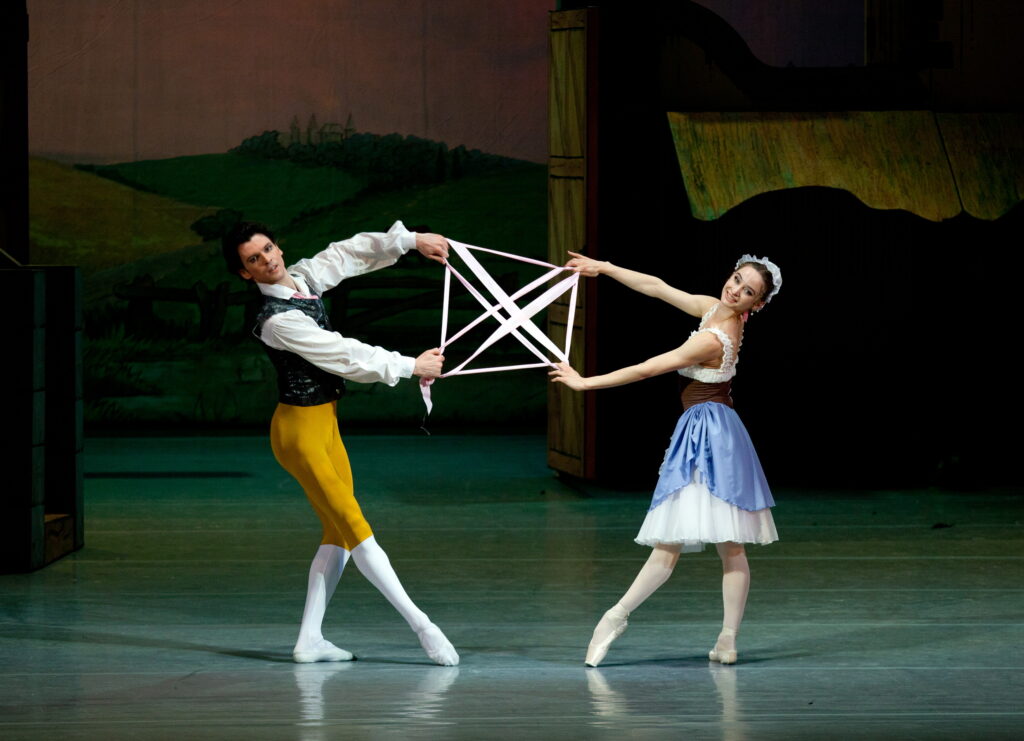
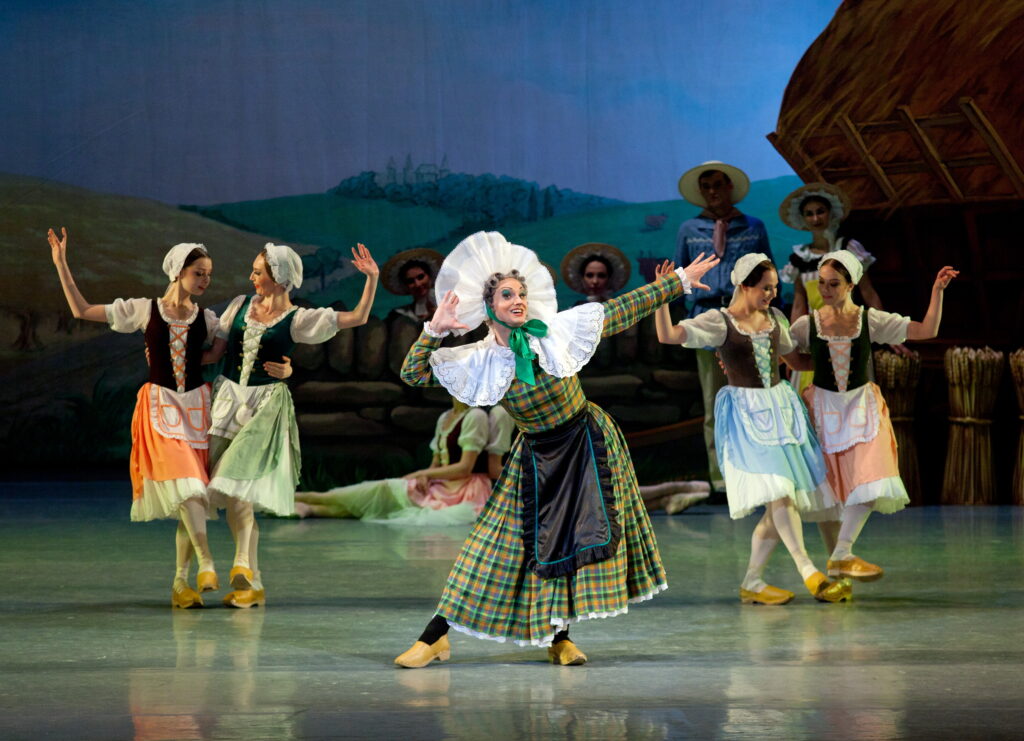
Dancers of the National Ballet of Ukraine, with Mykyta Sukhorukovas as Colas, Ilona Kravchenko as Lise and Yevhen Lohvynenko as Widow Simone in Ashton’s La Fille mal gardée, June 2025 © Oleksandr Putrov.
February 2026