
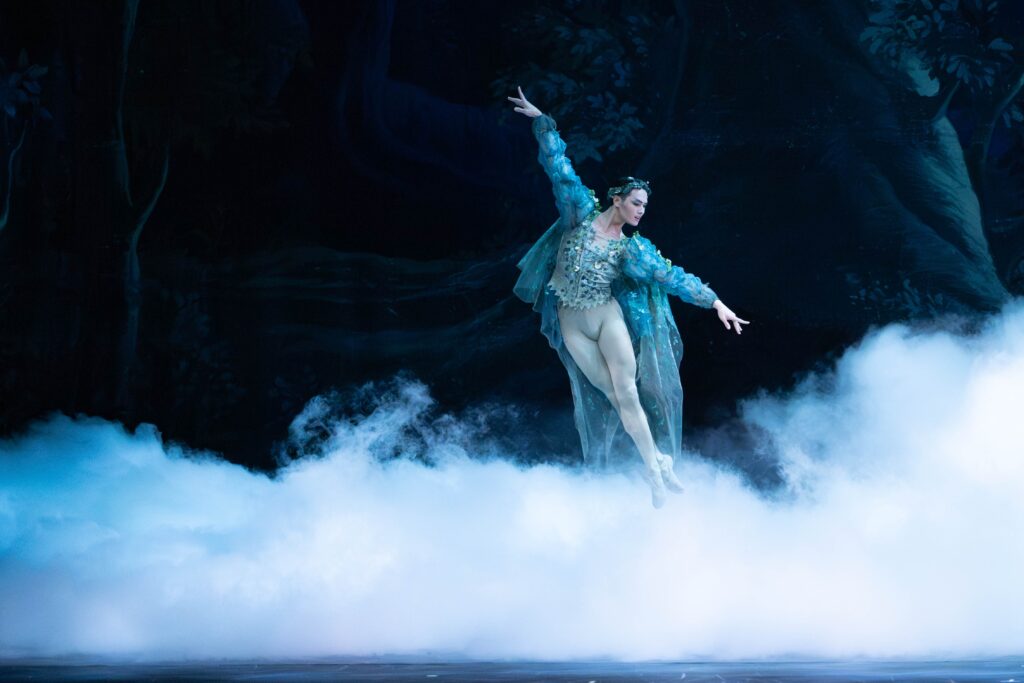
Sangmin Lee in Ashton’s The Dream, performed at the Citizens Opera House, Boston. Ph Brooke Trisolini, courtesy of Boston Ballet.
A conversation with Samantha Raine – senior répétiteur with The Royal Ballet and one of the Foundation’s trainee Ashton Stagers – by Rachel Thomas, Communications Manager
In Frederick Ashton’s The Dream, Shakespeare’s tangled woodland comedy is distilled to a single act. Through lyrical choreography, deft comedy and vividly drawn characters, Ashton created a ballet of remarkable clarity and economy that is at once enchanting and deeply human. For audiences, its magic can feel effortless. For a stager, however, the theatrical world of The Dream must be reconstructed with precision—and that apparent effortlessness is, as trainee Ashton Stager Samantha Raine explains, the result of meticulous work behind the scenes.
Samantha has spent nearly three decades with The Royal Ballet, first as a dancer and for the past 14 years as a senior répétiteur—performing, then teaching, Ashton in the place where he was Founder Choreographer and his ballets are a cornerstone of the repertory. Earlier this year, she encountered his work in a different context, travelling to Boston as part of the Foundation’s Ashton Stagers’ Programme to shadow Susan Jones – Regisseur of American Ballet Theatre and an experienced stager – as she mounted The Dream for Boston Ballet, who were performing it for the very first time. The visit gave Samantha the opportunity to see afresh a ballet she knows intimately.
At the heart of an Ashton Stager’s work is, of course, the challenge of passing on Ashton’s distinctive movement language. Though Samantha wasn’t responsible for teaching or coaching the choreography while shadowing, she recognises how important it is to help dancers grasp the essence of his style. The steps themselves, she explains, are often ‘very classical, on your leg, using the core, but with a lot of freedom,’ which can be difficult for those who haven’t performed Ashton frequently, and who dance works of many different styles. ‘It’s more than you ever want to do—the bend, the épaulement, the port de bras, the twist, the intricate footwork’, she says. ‘You should feel like you’ve done a workout!’
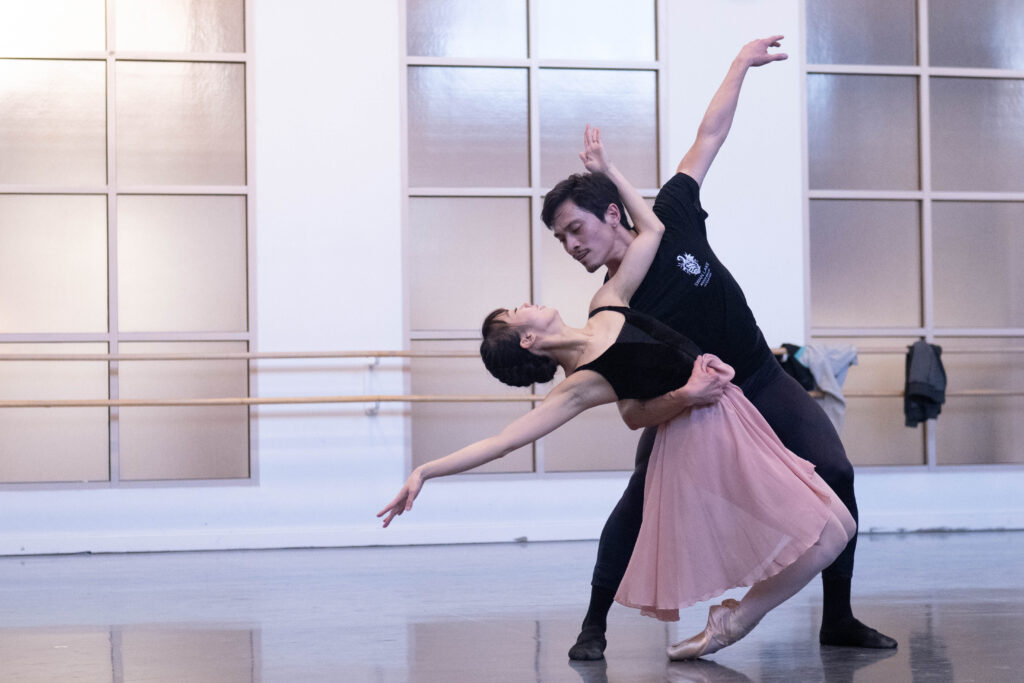
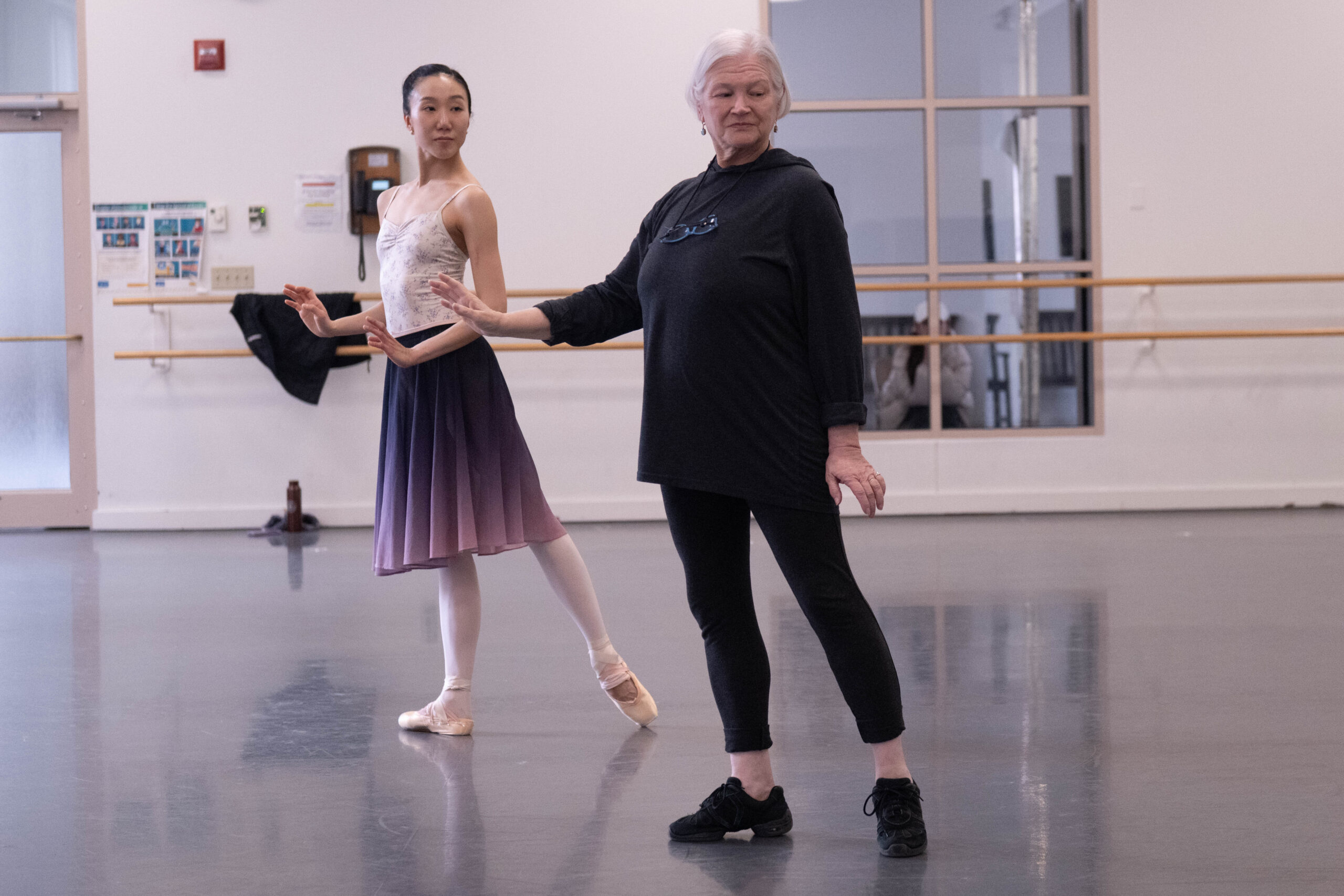
Chisako Oga, Jeffrey Cirio (left) and Ji Young Chae with stager Susan Jones (right) in rehearsal for Ashton’s The Dream. Ph Brooke Trisolini, courtesy of Boston Ballet.
For Samantha, passing on the style also means trusting the storytelling already contained within the steps. ‘Ashton’s so clever with how he choreographs these things that you don’t need to do extra… The choreography tells the story,’ she says. In The Dream, much of the humour depends on delicacy of tone: the characters must be clear, but never overdrawn. After the first performance in Boston, Samantha and Susan discussed whether some moments had gone too far. ‘The audience really reacted well, and I think that as a performer there’s sometimes a tendency to kind of build because of that response… It’s such a fine line,’ she says.
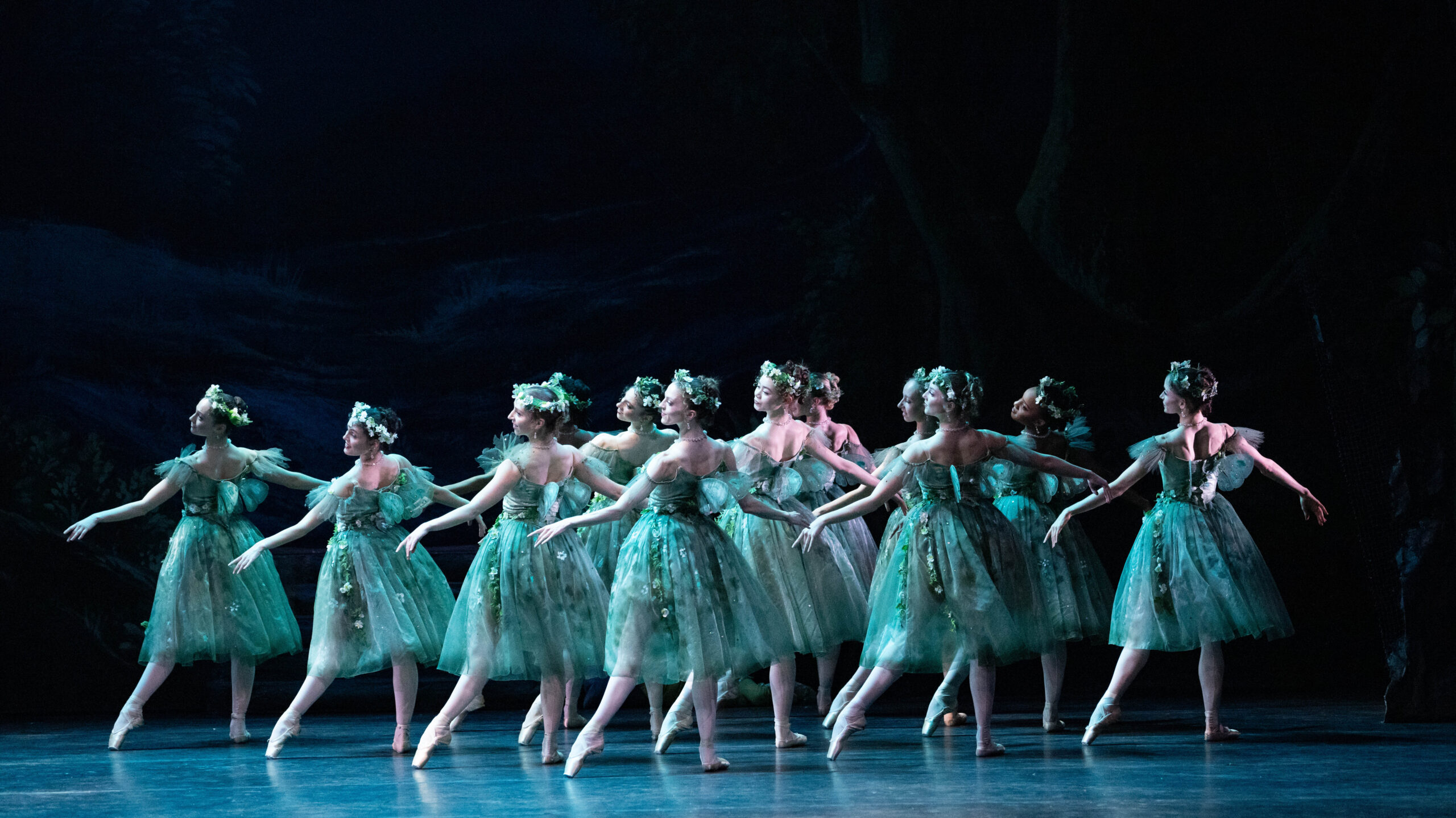
Artists of Boston Ballet in Ashton’s The Dream, performed at the Citizens Opera House, Boston. Ph Brooke Trisolini, courtesy of Boston Ballet.
The most revealing lessons from Boston, however, were not to do with the choreography. ‘I’ve danced the ballet many times, but going to a different company was really eye-opening,’ Samantha says. ‘It allowed me to look at the other things – the lighting, the set – and broaden my view of the whole end product. The focus is on the bigger picture; you can’t just focus on the dancers.’ In Boston, that bigger picture meant attending to everything from lighting cues to scenery, costumes and seemingly insignificant details: the precise placement of the fairies’ headdresses, for example, or the number of curls in their hair.
One memorable lesson involved the production’s fog effects, central to the scene in which the lovers lose themselves in the wood and the mix-ups begin. ‘The first time they released the fog, it was too much,’ Samantha recalls. ‘We couldn’t see anyone.’ Getting it right meant learning about and being able to coordinate nuances of everything from musical timing to stage temperature.
Shadowing an unfamiliar production also showed Samantha how much adaptation staging can require. The set Boston Ballet used for The Dream differs from The Royal Ballet’s, so some staging had to change accordingly. In London, for example, the lovers rest against solid trees; in Boston, softer scenery meant they had to lie on the floor instead—’it was great for me to kind of see the difference and see how it can be adapted,’ she says.
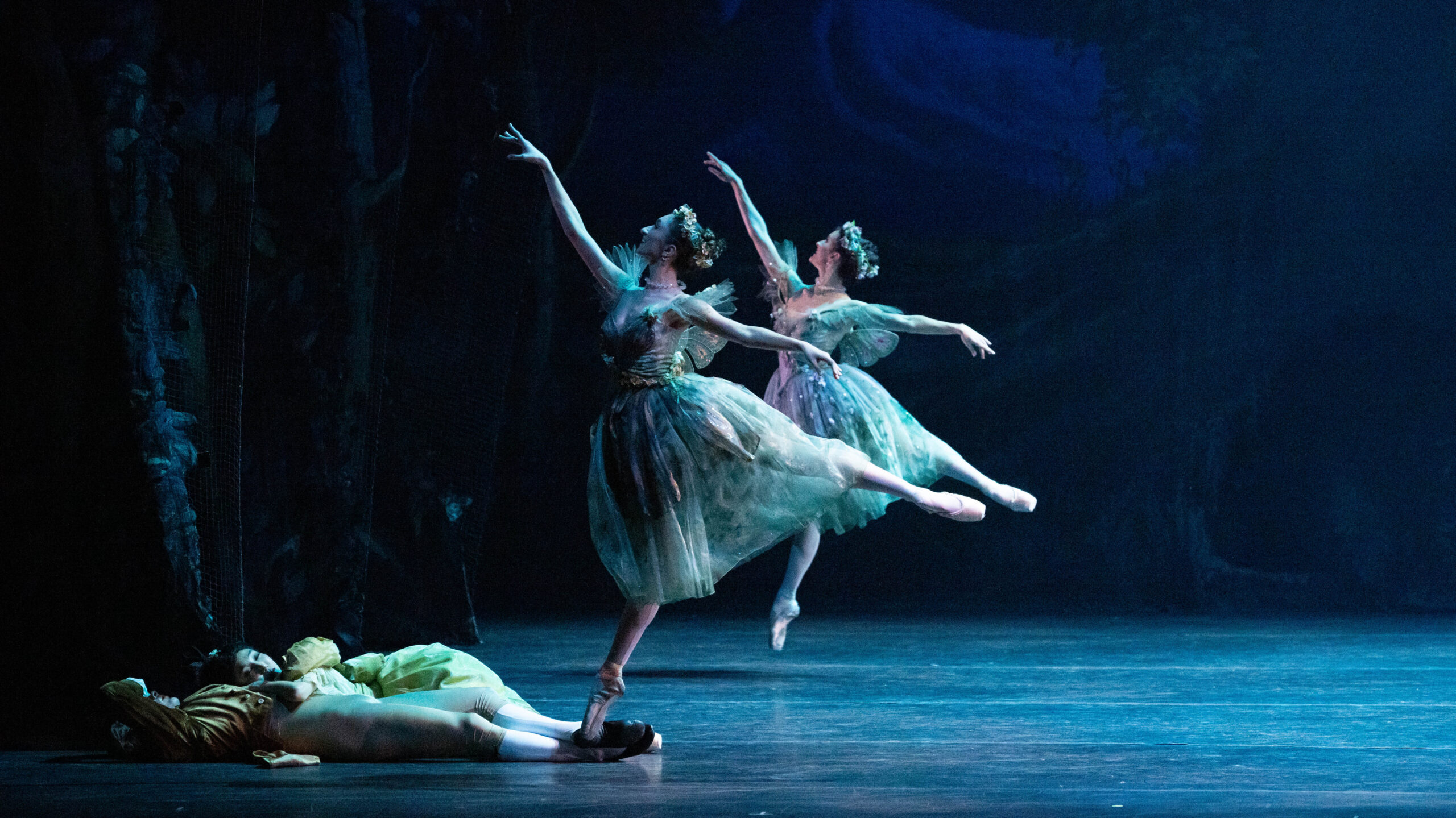
Artists of Boston Ballet in Ashton’s The Dream, performed at the Citizens Opera House, Boston. Ph Brooke Trisolini, courtesy of Boston Ballet.
And the need to adapt, it turned out, was interpersonal as well as practical. At the Royal Opera House, Samantha knows the staff and can read the room instinctively. In Boston, she found that ‘when you’re dealing with people you’ve never met, there’s more to think about.’ Alongside the artistic work came the need to build relationships with conductors, lighting designers, wardrobe teams and stage managers—while also gauging moods, managing frustrations and reminding everyone, as Samantha puts it, that ‘everyone’s human, just doing their best’.
‘What makes it so magical is everything coming together,’ she says. Being entrusted with bringing The Dream to the stage is something she describes as ‘an absolute privilege’, particularly because of its connection to Anthony Dowell, to whom Ashton left the ballet, and who, as Director of The Royal Ballet, gave Samantha her first contract when she was 17. ‘I have such amazing memories of when Anthony was my first Director,’ she says. ‘I got quite teary when he said he wanted me to take it on.’
For someone now helping to pass Ashton’s work on to a new generation, that trust is not something she takes lightly. ‘It’s a responsibility,’ she says. Experiences such as Boston are helping her understand the full scope of what that means: safeguarding not only a choreographic legacy but an entire creative vision—from storytelling and style to scenery, lighting and the carefully timed drift of fog across a darkened stage.